Somewhere in an archive, there is a record of where he was on the day he was captured, the camp that held him, and the train that brought him home. This is the step-by-step guide to finding it — the forms to file, the files that survived the 1973 fire, and how to read what comes back.
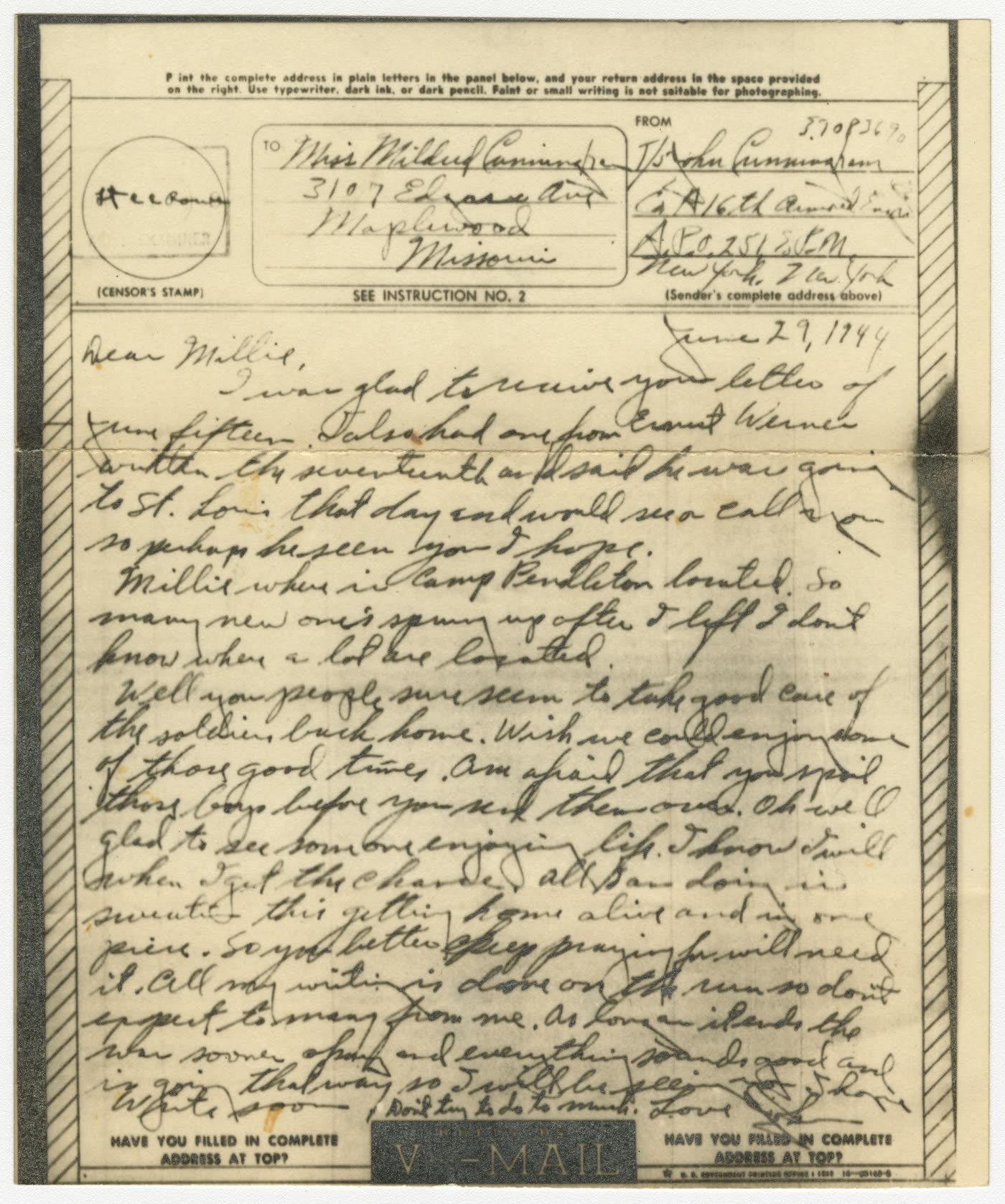
“All I am doing is sweating this getting home alive and in one piece.”
V-mail · Italy · June 29, 1944Service files, enlistment cards, unit morning reports, prisoner-of-war records, missing air crew reports, escape and evasion reports, burial files, the German and Japanese side of the paperwork. What each one is, where it lives, how to ask for it, and what it can tell you.
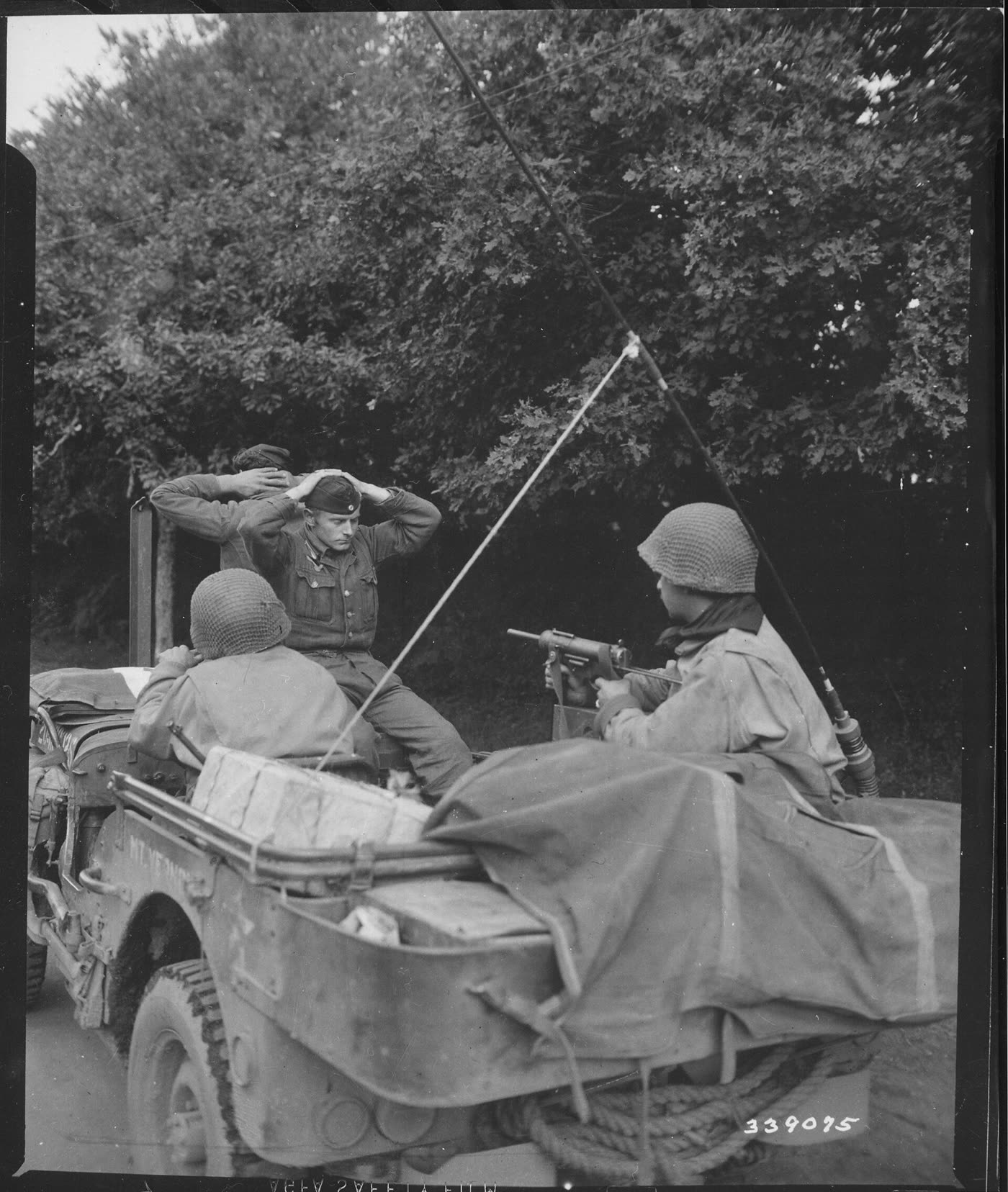
Start with what is already in the house — a discharge paper, a dog tag, a letter. Turn it into a serial number, a unit, and a date. Then follow that unit through the records, day by day, to the camp, the ship, or the field where his war happened.
Most families stop after one letter to St. Louis comes back saying "destroyed in the fire". That is where the real search begins. These are the main record sets the guide walks you through.
| The record | What it can tell you | Where it lives |
|---|---|---|
| Personnel file (OMPF) | Enlistment, training, units, awards, discharge | National Personnel Records Center, St. Louis — open to the public once 62 years have passed since discharge |
| Army enlistment record | Serial number, date and place of enlistment, civilian job, education | National Archives online database (Access to Archival Databases) — free |
| Draft registration card | Address, employer, physical description, next of kin | Digitized and searchable online, including free on FamilySearch |
| Morning reports | Where his company was, day by day — wounded, missing, captured | National Personnel Records Center — these were not lost in the 1973 fire |
| POW data file | Date of capture, camp, liberation — US prisoners in Europe and the Pacific | National Archives online database — free |
| Missing Air Crew Report | The last mission: aircraft, crew list, witness statements, last known position | National Archives — widely digitized |
| Escape & Evasion report | How a downed airman got home: helpers, routes, debriefing | National Archives — digitized in the online catalog |
| The other side's paperwork | German and Japanese POW cards, Red Cross registrations | National Archives (US), The National Archives Kew (UK), Bundesarchiv, ICRC |
On July 12, 1973, a fire in St. Louis destroyed an estimated 80% of the Army personnel files for soldiers discharged between 1912 and 1960.
It did not destroy his story. Pay records, morning reports, VA files, unit histories and hospital records were kept elsewhere — the guide shows how to rebuild a file from them.
Sources: National Archives and Records Administration (NPRC, AAD), U.S. Army Center of Military History.
Six chapters and four working appendices, in the order you should work through them. Each one: what the record is, where to ask, what to write, how long it takes, and how to read it when it arrives. Skip the sections that don't fit your family.
Most searches begin with almost nothing. These are the routes the guide lays out for the three most common starting points.
Every family's search is different, and some records were lost for good. The guide is honest about what each source can and cannot give you.

We make long documentaries about the prisoners of the Second World War — the secret camps, the captured crews, the men who came home and never said a word about it. Every episode is built from the same records this guide teaches you to find.
After every episode, the same question arrives: how do I find out what happened to my own grandfather? This guide is the answer — the research method behind the channel, organized step by step, with the forms, the archives and the shortcuts written down.
It is the official companion guide to the channel — and most of the records it points to are free to request.
Instant download — in your inbox within minutes of payment. Read on any phone, tablet or computer, or print it at the kitchen table.
Yes. The fire destroyed personnel files, not his whole paper trail. Final pay vouchers, morning reports, VA files, hospital admission cards and unit records were stored separately. The guide shows how families rebuild a service history from these, and how to ask St. Louis for a reconstructed file.
Usually, if you also know roughly where he lived. Draft cards and enlistment records are searchable by name and state, and they lead to a serial number — the key that opens almost every other record.
Yes. The US POW data file covers the Pacific as well as Europe, and the guide has a section on the Japanese side of the records and the Pacific camps.
There is a full section on The National Archives at Kew, Commonwealth service files and war graves, and the German record cards kept on British and Commonwealth prisoners.
Yes — the guide explains how to request records from the German Federal Archives, which now holds the former Wehrmacht information office files, including those of German prisoners held in the United States.
Most families don't. Many key records are free online or free to request. The guide tells you when a paid researcher at an archive is worth it, and what to ask them for.
An 81-page illustrated PDF you can read on any device or print at home — including the eight request-letter templates and the printable research log. Updates are sent free.
Email us and we will refund you.
$27 once. Instant download. Every archive, every form, and how to read what comes back.
Get the guide · $27 →